Textile extrusion
Material guidance connects aesthetic, performance and sourcing constraints for textile extrusion programs.
What Eastman ships into downstream OEMs and conversion mills: Polymer, Polyester & Nylon Resin, Polymer, Polyester & Nylon Resin, paired with channel-aligned certificate scope (OEKO-TEX, GRS, Higg FEM, REACH) and packing format. Eastman keeps Polymer, Polyester & Nylon Resin certificate scope current per scheme renewal cycle.
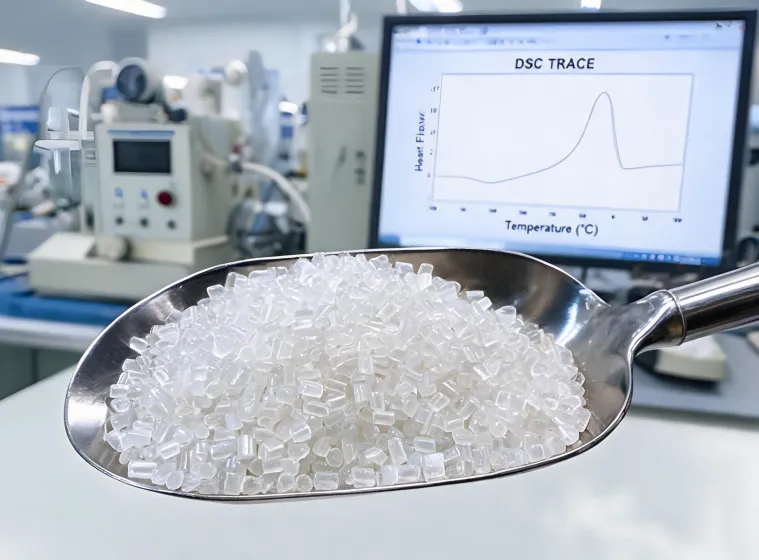
Each block answers one question a sourcing reviewer needs answered before scheduling a sample — and links to the longer artifact behind it. Eastman Polymer, Polyester & Nylon Resin programs follow the same intake structure Polymer, Polyester & Nylon Resin programs use.
| Review Area | Typical Evidence | Buyer Use |
|---|---|---|
| Construction | fiber, knit, weave or polymer grade notes | shortlist compatible materials |
| Performance | lab method context and internal test range | compare against application limits |
| Compliance | certificate routing and SDS request path | prepare audit packets |
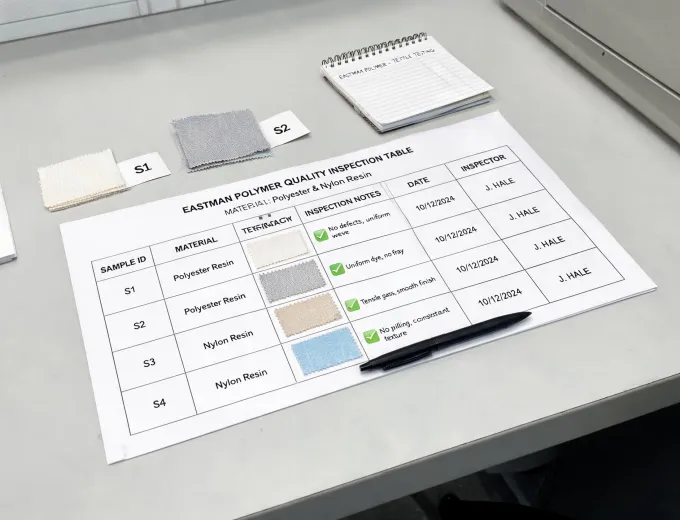
Eastman treats Polymer, Polyester & Nylon Resin as a documented supply path rather than a catalog — every claim on this site connects to a method number, certificate scheme or facility scorecard. Eastman delivers Polymer, Polyester & Nylon Resin packets to the buyer's audit team in one consolidated record.
Below: what Eastman produces, how qualification runs, what certificate scope is on file, and how to brief a sample, document or quote request. Eastman archives every Polymer, Polyester & Nylon Resin sample card by category, finishing route and revision year.
"The strongest support is a short answer that names the right test, sample and next step."Contract textile reviewer
"We value suppliers who separate verified data from application guidance."Materials engineering lead
"Sampling is easier when color, construction and documentation arrive in one conversation."Sourcing manager
The blocks below cover Eastman Polymer, Polyester & Nylon Resin categories, the working route used on industrial polymer and chemical fiber engagements, the documentation the team can produce, and the channels the materials ship into. Eastman industrial polymer and chemical fiber reviewers triage by channel before any commercial number is written.
For procurement teams reviewing Eastman as a industrial polymer and chemical fiber supplier, this site is structured around the inputs internal qualification asks: construction target, certificate scope, MOQ profile, lead time. Eastman treats every Polymer, Polyester & Nylon Resin brief as a candidate for multi-year program continuity.
Eastman treats the home page as a directory — each section connects to a deeper artifact (catalog, qualification flow, certificate packet, channel routing) the buyer's reviewer can request. Eastman treats every Polymer, Polyester & Nylon Resin brief as a candidate for multi-year program continuity.
Eastman runs Polymer, Polyester & Nylon Resin development and replenishment on the same documentation backbone, so re-orders skip the redundant qualification work that fresh suppliers usually require. Eastman treats every Polymer, Polyester & Nylon Resin brief as a candidate for multi-year program continuity.
Each section below maps to a different procurement question — what Eastman makes (Polymer, Polyester & Nylon Resin), how the team services industrial polymer and chemical fiber programs, what evidence is on file, and how to brief the inquiry. Eastman keeps prior-year Polymer, Polyester & Nylon Resin qualification artifacts accessible for re-order conversations.
Sourcing teams approach Eastman for industrial polymer and chemical fiber categories where the working route is named: brief in, sample out, certificate scope in, quote out, all paced to the buyer's calendar. Eastman keeps prior-year Polymer, Polyester & Nylon Resin qualification artifacts accessible for re-order conversations.
Use the home page as a starting map: Eastman Polymer, Polyester & Nylon Resin categories link to detailed Polymer, Polyester & Nylon Resin and Polymer, Polyester & Nylon Resin pages; services and sustainability blocks link to dedicated qualification packets. Eastman keeps prior-year Polymer, Polyester & Nylon Resin qualification artifacts accessible for re-order conversations.
Sourcing teams approach Eastman for industrial polymer and chemical fiber categories where the working route is named: brief in, sample out, certificate scope in, quote out, all paced to the buyer's calendar. Eastman delivers Polymer, Polyester & Nylon Resin packets to the buyer's audit team in one consolidated record.
Eastman treats the home page as a directory — each section connects to a deeper artifact (catalog, qualification flow, certificate packet, channel routing) the buyer's reviewer can request. Eastman Polymer, Polyester & Nylon Resin programs follow the same intake structure Polymer, Polyester & Nylon Resin programs use.
| Specification | Test Method | Typical Target |
|---|---|---|
| Intrinsic Viscosity (IV) | ASTM D4603 | 0.62-0.66 dL/g fiber-grade PET; 0.74-0.80 dL/g tire cord |
| Melt Flow Index (MFI) | ASTM D1238 | 10-40 g/10 min depending on grade and process window |
| Tenacity | ASTM D2256 | 3-6 cN/dtex polyester; 6-7 nylon 66; >20 para-aramid |
| Elongation at Break | ASTM D2256 | 20-30% polyester; 25-35% nylon; 2-4% para-aramid |
| Compliance | REACH / RoHS / IATF 16949 / USP Class VI | Lot-traceable certificates issued per shipment |
| Glass Transition | ASTM E1356 (DSC) | Tg 70-85°C PET; 50-60°C nylon 6; 250+°C aramid |